

Fault in an Ontario car accident can be shared. In a shared-fault collision in Ontario, insurers apply standardized Ontario Fault Determination Rules to assign fault percentages for insurance purposes, while courts assess legal responsibility using negligence principles. If you are partly at fault, your compensation in a lawsuit may be reduced by your percentage of fault. However, accident benefits are generally available regardless of fault under Ontario’s no-fault system, subject to statutory rules and specific exclusions set out in the legislation. In the Hamilton area, including Stoney Creek, Ancaster, Dundas, and Waterdown, early evidence and a clear strategy can significantly affect your outcome when liability is disputed.
Table of Contents
ToggleShared Fault and Partial Liability in Ontario: What It Means
A shared fault accident means more than one person contributed to a collision or the resulting injuries. In a partial liability car accident, responsibility is divided into percentages—such as 70/30 or 50/50—based on each party’s role. There may also be more than two parties who are responsible. In that case, the percentage of fault is divided by three or more parties involved.
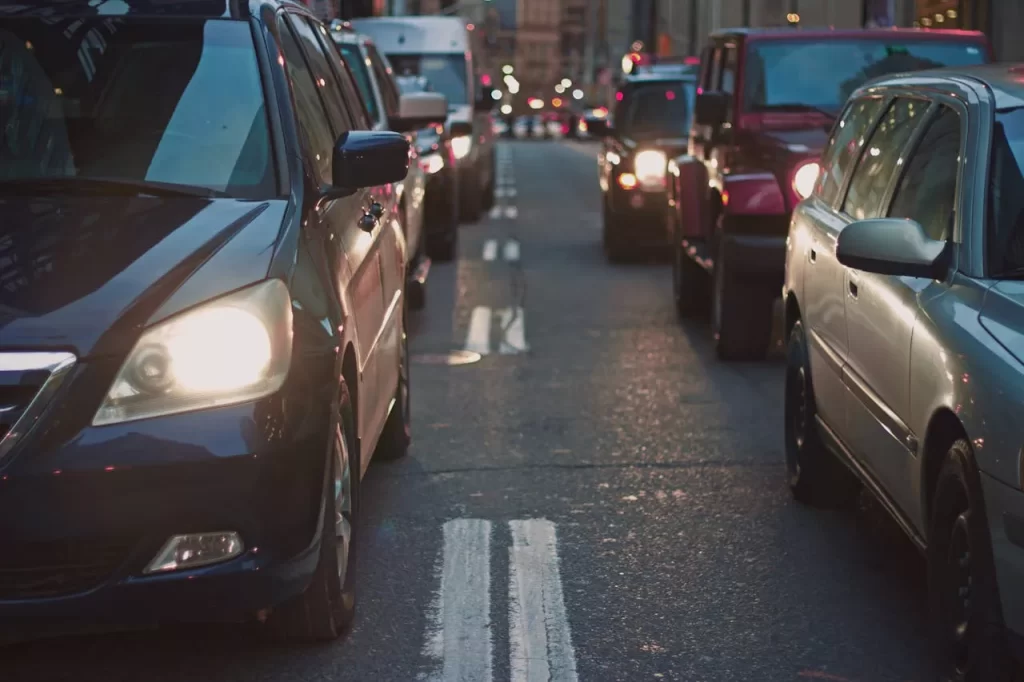
For example, on Hamilton’s Highway 403 and QEW or the Linc, one car may be changing lanes while merging. Another driver may be going too fast at the same time, also contributing to the resulting crash. On the Red Hill Valley Parkway and other high-traffic areas, especially, left-turn accidents and rear-end chain reactions in congestion can mean shared fault accidents.
Let’s look more closely at how shared fault works, how it affects partial fault compensation in Ontario, and what to do if you disagree with the fault determination that Ontario insurers assign.
Can Fault in an Auto Accident Be Shared in Ontario?
Yes. Under Ontario law, fault can be shared between drivers and, in some cases, passengers or pedestrians or other parties. This is commonly referred to as contributory negligence Ontario car accident situations.
What Is Partial Liability After a Car Accident?
Partial liability means your actions contributed to the accident or its consequences. Your share of responsibility is expressed as a fault percentage car accident Ontario, which can affect:
- Insurance coverage
- Premiums
- Lawsuit compensation
Who Decides Fault: Insurance Fault Rules vs. Legal Liability
Many drivers do not realize that “fault” is determined in two different ways in Ontario. For insurance purposes, fault is assigned using the Ontario Fault Determination Rules (R.R.O. 1990, Reg. 668). These rules:
- Use standardized accident scenarios.
- Are applied without reference to weather, visibility, or point of impact.
- Focus on vehicle movements and positions.
If a collision does not clearly fit within one of these scenarios, insurers may rely on general legal principles.
The Financial Services Regulatory Authority of Ontario (FSRA) provides consumer guidance on how insurers apply these rules and how drivers can challenge fault determinations.
Insurance fault and legal liability are different.
- Insurance fault determines how claims are processed.
- Legal liability is decided under negligence law.
Under Ontario’s Negligence Act, if more than one party is responsible, damages are reduced in proportion to each party’s share of fault.
For example, if you are in a car accident after hitting another car while passing, an insurer may assign you 50% fault under the rules. However, in a lawsuit, a court may find you only 20% responsible after reviewing broader evidence. This means that if you are awarded $10,000 in a lawsuit, your recovery is reduced by $2,000, to $8,000.
How Partial Fault Affects Insurance Coverage and Property Damage Payments
Fault percentages directly affect how your vehicle damage is handled. In Ontario, vehicle damage is handled through Direct Compensation – Property Damage (DC-PD).
If you are 0% at fault, DC-PD typically covers your vehicle damage. If you are partially at fault, the amount paid depends on your degree of fault and your policy.
For example, FSRA guidance notes that if you are 50% or more at fault, your insurer may pay 50% of the damage, less any applicable deductible. If you are 100% at fault, DC-PD generally does not apply. Most standard policies do not include a DC-PD deductible, although some drivers choose one to reduce premiums.
If you carry collision coverage, it may cover damage not paid under DC-PD, subject to your deductible.
Important: 2024 DC-PD Coverage Changes
As of January 1, 2024, Ontario drivers can opt out of DC-PD coverage.
This matters because if you remove DC-PD, your insurer may not pay for your vehicle damage—even if you are not at fault. You may need to rely on optional coverage or pursue recovery through other means.
Policy choices vary, so it is important to understand your coverage.
Can My Insurance Premiums Go Up If I Am Partly at Fault?
Yes. FSRA guidance indicates that if you are found 50% or more at fault, your premium will likely increase at renewal. Premium impacts still vary by insurer and policy. If your premiums do increase, you do have the option of comparing policies or working with a broker to find the lowest premium in your situation.
What to Ask Your Insurance Adjuster
If you are assigned partial liability, you will want to ask the following:
- Which Ontario Fault Determination Rule was applied?
- What evidence was used to support the decision?
- How did they handle conflicting accounts?
These questions help clarify how shared fault affects settlement outcomes in your case and can help you understand how the insurer reached their conclusions.
How Partial Fault Affects Injury Compensation in a Lawsuit
Partial fault has a direct impact on how much compensation you may receive. Under Ontario’s Negligence Act, damages are reduced based on your percentage of fault.
For example, let’s say that you are in a car accident in Stoney Creek after another car ran a red light. If your damages total $100,000 and you are 20% at fault, your compensation is reduced to $80,000.
This reduction applies to:
- Pain and suffering, which is capped in Ontario.
- Lost income.
- Future care costs.
You do not have to have contributed to the accident to have your compensation in a lawsuit affected. If the court determines that your negligence contributed to your injuries you may be found partly at fault. For example, if you were hit head-on by a drunk driver but you were not wearing a seatbelt, the court may determine that you were partly at fault for your injuries and reduce your recovery by that percentage amount, even though the other driver clearly caused the accident.
Can You Still Get Compensation If You Share Blame for the Accident?
Yes. Even if you share fault, you may still recover compensation. Ontario claims typically involve accident benefits through a no-fault system governed by the statutory accident benefits (SABS) in Ontario. These benefits are available regardless of fault, but they are subject to statutory rules and specific exclusions set out in the legislation.
SABS alone may also not completely cover your accident costs, which is why many drivers turn to a tort claim or lawsuit. A lawsuit allows you to seek compensation beyond what SABS can offer, but it is reduced by your share of fault.
In a lawsuit, it is important to work closely with accident benefits lawyers Hamilton drivers trust, along with personal injury lawyers, who can make sure that you are not blamed excessively and that fault is assigned fairly. Hamilton car accident lawyers may look for contributory negligence fact patterns such as:
- Unsafe lane changes.
- Speeding.
- Distracted driving.
- Following too closely.
- Failure to wear a seatbelt.
- Visibility issues involving pedestrians or cyclists.
Lawyers will examine evidence to determine if any of these patterns were present, which could help determine fault. In some cases, passengers may also be found partially at fault. For example, if passengers did not wear a seatbelt, this may have contributed to injury severity.
Evidence That Helps Protect Your Compensation When Fault Is Shared
Strong evidence can significantly affect fault percentage determinations in car accidents in Ontario cases. The following types of evidence can be especially important:
- Scene documentation. Photos of signage, lane markings, skid marks, debris field, lighting conditions, and other details can help determine the point of impact and can help determine what caused the accident. Weather is not usually used to determine fault, but it can help establish the overall story of the collision and help with negligence analysis. Investigators and accident reconstruction experts may use all this evidence to build a complete picture of the scene.
- Witness statements. Witnesses can determine whether they saw someone speeding, running a red light, or otherwise driving dangerously. It is important to secure witness testimony soon after the accident, or lawyers for the other side may question the accuracy of witnesses’ memories.
- Video evidence. Many businesses in the Burlington, Ancaster, and Hamilton areas have security cameras that can capture images of nearby roads. So can private doorbell cameras. Securing this evidence can help you determine whether someone else’s actions caused your accident.
- Collision reporting records. Police reports and other records can gather evidence and provide insights about accident causes.
- Medical documentation. Records from Hamilton Health Sciences, your doctor, or St. Joseph’s Healthcare Hamilton can help establish the severity of your injury and how the injury may have happened.
While there are many types of evidence that may be available, evidence can become unreliable or disappear quickly. Homeowners and businesses may delete old surveillance footage and witnesses may forget what they saw unless they are interviewed and their memories carefully safeguarded. When you work with an accident lawyer early, your lawyer can step in to gather and protect evidence early.
Deadlines, Disputes, and Next Steps for Hamilton Drivers
If you disagree with fault determination that Ontario insurers assign, taking action early is critical. You can challenge a fault determination by:
- Asking which Fault Determination Rule was applied. This can help you trace how Ontario insurers see the claim.
- Requesting a detailed explanation. Request this in writing, so you and your lawyer can review it in detail.
- Submitting additional evidence. If an insurer relied on incomplete evidence, new, reputable evidence could help. However, you will want to work with a lawyer who can present additional evidence in a compelling way and present the strongest evidence available in your case.
- Keeping records of communications. Always keep copies of any paperwork or documents related to your injuries, accident, insurance, or treatment. If you speak with doctors, insurance adjusters, or other parties, on the phone or in person, keep detailed notes about who you spoke to and what was said. Keeping clear communication records helps your lawyer maintain a clear narrative of your claim.
- Contacting the insurer’s complaint officer. Contacting the insurer’s complaint officer. Your insurer’s internal complaint path is one option you can explore. If you do not have compelling new evidence, however, you may want to consult with a car accident lawyer in Hamilton to find out how you can strengthen your claim.
In these cases, a lawyer can help you gather evidence and determine the best course of action.
How Long Do You Have to File a Car Accident Lawsuit in Ontario?
Most claims must be started within two years from the date the claim was discovered, subject to specific exceptions.
As of July 1, 2026, medical, rehabilitation, and attendant care benefits remain mandatory, while other benefits will be offered as optional for policies entered into or renewed on or after that date.
What Should I Do Next?
Gather evidence, confirm your coverage, and avoid early settlement decisions. A legal review can help clarify your options and protect your position. I started Derek Wilson Injury and Disability Lawyer because I saw how many injured people in Hamilton, Stoney Creek, and beyond were struggling to get the fair benefits they deserved. If your insurer is assigning unfair fault, delaying benefits, or pushing for a quick settlement while fault is still disputed, I invite you to contact my law firm for a free consultation.