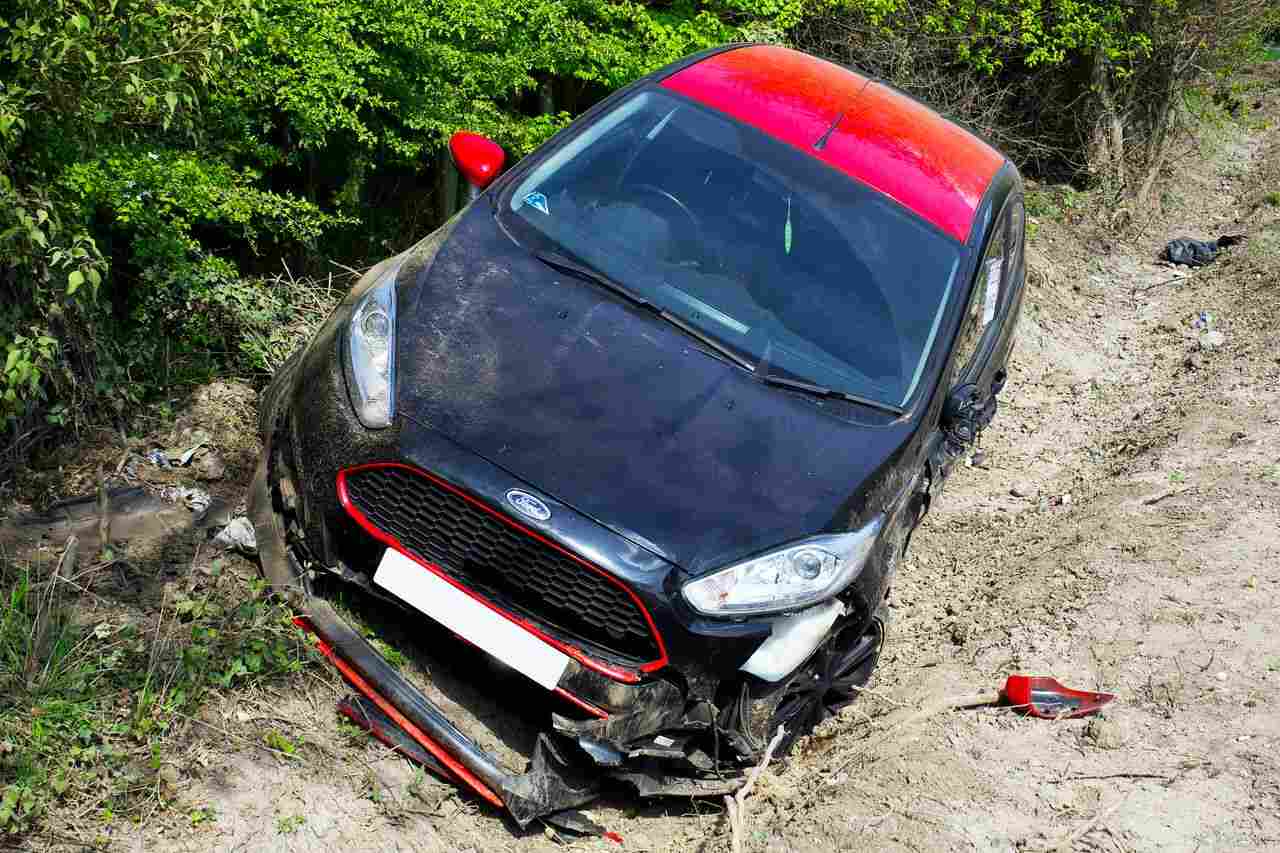
Head-on collisions are the most severe common collision type in Ontario. Fault usually rests with the driver who left their lane, though it must still be proven. Accident benefits are available immediately, regardless of fault. I handle Hamilton head-on collision on a contingency fee basis, meaning you don’t pay upfront legal fees.
If Your Family Member Is in Hospital Right Now
If your loved one is in St. Joseph’s, Hamilton General Hospital, or any area hospital after a head-on crash:
- A substitute decision-maker, attorney for property, or litigation guardian may be able to sign a retainer on their behalf if your loved one is too injured to make decisions.
- Notify the injured person’s insurer within 7 days where possible, and submit the OCF-1 Application for Accident Benefits within 30 days after receiving it.
- Preserve the damaged vehicle and any possible evidence.
Why Trust Derek Wilson for Your Head-On Collision Claim in Hamilton
When you hire me as your Hamilton car accident lawyer, I personally handle your case. In a serious claim that may continue for several years, you should never have to explain your family’s circumstances to a different junior lawyer every few months.
I spent the early part of my career as a partner at a Toronto law firm defending insurance companies. That experience gives me insight into how insurers investigate, reserve, value, and defend serious injury claims from the inside. It is knowledge I now use on behalf of my clients.
Today, I act exclusively for injured people and their families, and have been doing so since 2009. After completing my LL.M. at the London School of Economics in 1997, I returned to Hamilton (my hometown) and opened my own practice in 2013.
I deliberately maintain a limited caseload because catastrophic injury claims require direct involvement.
Unlike many personal injury lawyers in Hamilton, I can proudly say my firm has been recognized by Best Lawyers in Canada and Best Law Firms. I am a member of the Hamilton Law Association and regulated by the Law Society of Ontario. The firm also maintains a 5.0 Google rating across more than 100 reviews.
I do not publish settlement figures or advertise recovery amounts. Every injury is different, and I believe it is more honest to evaluate each case in a free consultation than create unrealistic expectations.
There are no legal fees unless I recover compensation for you. If your injuries prevent you from travelling, I can arrange to meet you at home or, where appropriate, in hospital.
What Should You Look for in a Lawyer After a Serious Head-On Collision?
Choose a head-on accident lawyer in Hamilton who personally manages the file, understands both Ontario’s Accident Benefits system and civil litigation, and has experience handling catastrophic injury claims.
Who Is at Fault in a Head-On Collision in Ontario?
In a head-on collision in Ontario, liability usually rests with the driver who crossed the centre line, entered the lane of oncoming traffic, or travelled the wrong way. However, fault must be established through evidence.
For insurance purposes, fault is determined using Ontario’s Fault Determination Rules (O. Reg. 668). A civil lawsuit is different. To recover compensation through a tort claim, negligence must be proven under common law by establishing:
- The other driver owed you a duty of care.
- The driver breached that duty.
- The breach caused the collision.
- The collision caused your injuries and losses.
The Highway Traffic Act also applies. Part X sets out the rules of the road, including the duty to keep right, while section 130 addresses careless driving. If the other driver faces criminal or provincial charges, that evidence may support your claim, but it does not determine civil liability on its own.
How the crash happened | Usual liability position | What must be established |
Crossed the centre line | Crossing driver | Why the vehicle entered the opposing lane |
Wrong-way entry onto a highway or ramp | Wrong-way driver | Whether impairment, a medical event, or signage contributed |
Unsafe passing | Passing driver | Sightlines and whether passing could be completed safely |
Loss of control on snow or ice | Fact-dependent | Speed for conditions and possible road maintenance issues |
Driver fell asleep | Driver | Fatigue, distraction, or commercial hours-of-service records |
Sudden medical emergency | Contested | Whether the event was reasonably foreseeable |
Mechanical or tire failure | Manufacturer or repairer may share liability | Maintenance records and defect evidence |
A serious head-on collision may also involve defendants beyond the other driver. Depending on the facts, a claim could include:
- A commercial employer under vicarious liability.
- The owner of the vehicle.
- A vehicle or component manufacturer.
- A repair facility responsible for negligent maintenance.
- A municipality or the province where road design, signage, or winter maintenance contributed to the collision.
Claims involving municipalities may require written notice within 10 days. Missing that notice period may prevent the claim from proceeding.
If the at-fault driver was impaired, the civil claim also proceeds independently of any criminal prosecution. A criminal case and a personal injury lawsuit have different purposes, different standards of proof, and often different timelines. Your civil claim does not have to wait for the criminal matter to conclude.
Under Ontario’s Negligence Act, if your loved one was partly at fault, any recovery may simply be reduced according to their share of responsibility rather than eliminated altogether.
Is The Driver Who Crossed the Centre Line Always at Fault in Ontario?
Usually, but not always. Evidence is used to determine why the driver entered the wrong lane.
Can You Still Make a Claim if Your Family Member May Have Been Partly at Fault?
Yes. Even if your family member shares some responsibility for the collision, they may still recover compensation if another driver was also negligent.
Why Head-On Collisions Cause the Most Serious Injuries
Head-on collisions cause some of the most severe injuries seen in Ontario because both vehicles decelerate against each other rather than travelling in the same direction. The closing speed concentrates the force of the impact, meaning occupants absorb significantly more energy than they typically would in a rear-end or sideswipe collision at similar speeds.
Common injuries after a head-on collision include:
- Traumatic brain injury and diffuse axonal injury.
- Spinal cord injury, including paraplegia, tetraplegia, and incomplete spinal cord syndromes.
- Complex orthopaedic fractures, including femur, pelvic, and tibial plateau fractures requiring ORIF and staged surgery.
- Chest and abdominal trauma, including rib fractures, pulmonary contusions, organ lacerations, and internal bleeding.
- Seatbelt-pattern injuries affecting the abdomen, sternum, and clavicle.
- Facial fractures, dental injuries, permanent scarring, and degloving injuries.
- Traumatic amputation.
- Burn injuries where fire or fuel is involved.
- Psychological injuries, including PTSD, depression, driving anxiety, and prolonged grief experienced by surviving passengers or family members.
From a legal perspective, a claim should generally not be resolved until doctors have a clearer understanding of impairment and long-term needs. Settling before maximum medical recovery may leave important future losses unaccounted for.
Why Are Head-On Collisions More Dangerous Than Other Types of Car Accidents?
Head-on collisions involve significantly greater energy transfer than rear-end or sideswipe collisions, so they often result in traumatic brain injury claims and other serious claims.
How Long Does Recovery Take After a Serious Head-On Crash?
Every recovery is different. Some people improve over months, while others are permanently injured.
Catastrophic Injuries and Fatal Head-On Crashes: What Families Need to Know
A serious head-on collision may qualify as a catastrophic impairment under Ontario’s Statutory Accident Benefits Schedule (SABS). This designation provides access to substantially higher medical, rehabilitation, and attendant care funding than the non-catastrophic tier.
Insurance companies do not automatically classify an injury as catastrophic. The designation must be supported by appropriate medical assessments. It is frequently contested.
As of July 1, 2026, Ontario Regulation 383/24 amended the SABS. Medical, rehabilitation, and attendant care benefits remain mandatory, while income replacement, caregiver, housekeeping, non-earner, death, and funeral benefits are now optional coverages that must have been purchased under the policy. If your family member has been seriously injured or you are wondering whether you may have a wrongful death claim, bring the automobile insurance policy declaration page to your consultation with me so we can review coverage.
What Qualifies as a Catastrophic Impairment in Ontario?
Depending on the circumstances, catastrophic impairment may include severe brain injury, spinal cord injury, amputation, blindness, or certain combinations of permanent physical and psychological impairments.
Who Can Bring a Claim if Someone Dies in a Head-On Collision in Ontario?
If someone dies following a head-on collision, a claim may be brought by the deceased person’s estate.
Compensation After a Head-On Collision in Ontario
Compensation following a head-on collision in Ontario usually comes from two separate legal processes: Accident Benefits and a tort claim:
Accident Benefits | Tort Claim |
Available regardless of fault | Requires proof that another party was negligent |
Claim made through your own insurer | Claim brought against the at-fault driver or other liable parties |
Covers medical treatment, rehabilitation, attendant care, and available optional benefits | Covers pain and suffering, income loss, future care costs, and other damages |
OCF-1 generally submitted within 30 days | Lawsuit generally started within two years |
Accident Benefits provide immediate financial assistance regardless of who caused the collision. To secure your benefits:
- Notify the insurer within 7 days, where possible.
- Submit the OCF-1 Application for Accident Benefits within 30 days after receiving it.
- Complete the OCF-2 Employer’s Confirmation of Income, where applicable.
- Have a regulated health professional complete the OCF-3 Disability Certificate.
Depending on the available coverage, Accident Benefits may help pay for medical treatment, rehabilitation, attendant care, and, where optional coverage applies, income replacement and other benefits.
A tort claim is a separate path. It seeks compensation from legally responsible parties, including compensation for:
- Pain and suffering.
- Past and future income loss.
- Loss of earning capacity.
- Future care costs.
- Home and vehicle modifications.
- Assistive devices.
- Attendant care beyond available Accident Benefits.
- Housekeeping expenses.
Eligible family members may also have claims under the Family Law Act.
Ontario law applies a statutory deductible to many pain and suffering awards, together with a serious and permanent impairment threshold. In genuinely catastrophic head-on collision cases, damages often exceed that threshold, making the deductible far less significant than it is in less serious injury claims.
Most lawsuits must generally be started within two years under the Limitations Act, 2002, although different notice periods may apply in certain municipal road-condition claims.
What Compensation Can You Claim After a Head-On Collision in Ontario?
The compensation available depends on the injuries, available insurance coverage, and evidence supporting the claim.
What to Do After a Head-On Crash in Hamilton
If your loved one has been seriously injured in a head-on collision, medical care comes first. Once immediate treatment is underway, you will want to:
- Follow the trauma team’s recommendations.
- Preserve the vehicle and any other evidence.
- Obtain the police occurrence number.
- Notify the injured person’s automobile insurer within seven days, where possible.
- Begin the OCF-1 Application for Accident Benefits within 30 days after receiving it.
- Keep every receipt and maintain a dated journal recording medical care, setbacks, and day-to-day limitations.
- Consult with a head-on collision lawyer before discussing the case with an insurer or accepting any offer.
Many serious head-on collisions around Hamilton occur on undivided roads such as Highway 6, Highway 8, Wilson Street in Ancaster, and rural roads. High-speed routes including Highway 403, the QEW, Highway 401, and the Linc also present risks.
What Should Families Do in the First 48 Hours After a Serious Head-On Collision?
Focus on medical care, preserve the vehicle, notify the insurer, begin the Accident Benefits process, keep records of every expense, and obtain legal advice.
Speak With Hamilton Head-On Collision Lawyer Derek Wilson — Free Consultation
If you need a head-on collision lawyer in Hamilton, I offer a free, no-obligation consultation. I work on a contingency fee basis, which means you pay nothing unless I recover compensation for you.
You deal directly with me from your first call through the conclusion of your claim.
If your family member is in hospital and you are unsure what to do next, call me. I can explain who can act on behalf of an injured person and help preserve important evidence while your family focuses on recovery.
You can reach me at 905-769-0418. My office is at 19 Bold Street, Unit 1 in Hamilton.
I represent clients throughout Hamilton, Ancaster, Dundas, Stoney Creek, Waterdown, Binbrook, Burlington, Grimsby, Brantford, Cambridge, Niagara, and communities across the Golden Horseshoe.
The two most important legal deadlines are the 30-day Accident Benefits application period and the general two-year limitation period for starting a lawsuit. If you have questions about either, contact my office for a free consultation before those deadlines expire.