

Personal Injury & Disability Lawyer » Broken Bone Injury Lawyer in Hamilton | Fracture Claims in Ontario
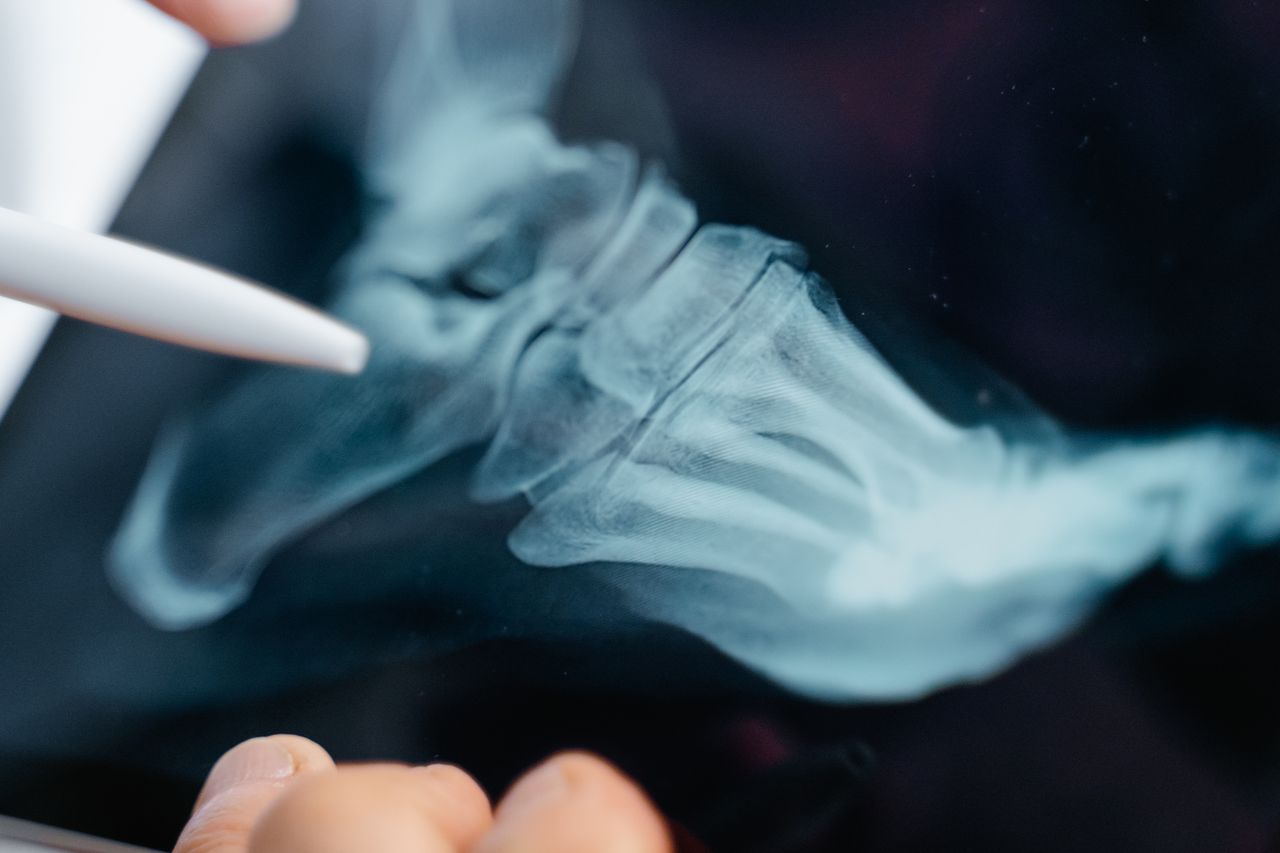
A broken bone is not a minor injury. In Ontario, you may be entitled to compensation if your fracture was caused by someone else’s negligence—in a car accident, for example. I’m a Hamilton broken bone injury lawyer who has been fighting insurers since 1995. Call me at 905-769-0418 for a free consultation.
Table of Contents
ToggleYou may have a claim if someone else’s negligence caused your fracture and the injury has affected your health, income, or independence.
Medically, a fracture and a broken bone are the same thing—there is no such thing as a break that is “worse than” a fracture. What matters is how the injury happened and how it continues to affect your life.
As a Hamilton personal injury lawyer, I often work with people who have been told, “It’s only a broken bone.” A fracture may heal on an X-ray, but that does not mean the person has recovered. Someone with a “fully healed” tibia may still be unable to stand through an entire work shift or take care of their child.
A fracture can change your life by causing:
In Hamilton, fractures commonly result from:
If another person’s negligence caused an injury that continues to affect your life, you may have a claim.
It can be. However, “serious” has a specific legal meaning in Ontario motor vehicle accident claims. A fracture that appears to have healed may still qualify if it causes a permanent serious impairment of an important physical, mental, or psychological function. Read the compensation section below to understand how the legal test works.
I began my legal career representing insurance companies. I know exactly how they often undervalue broken bone claims because I helped structure those arguments. Today, I use that insider knowledge exclusively to protect injured people from the strategies insurers rely on to minimize compensation.
When you work with me, your file is not handed to junior lawyers or shuffled between different members of a large legal team. I deliberately maintain a limited caseload so I can remain personally involved throughout the whole of your case.
I have practiced personal injury and insurance litigation since 1995. I work on a contingency fee basis, which means you pay no upfront legal fees unless I recover compensation for you.
I have been recognized in The Best Lawyers in Canada for 2025 and 2026, and my firm has been recognized as Best Law Firms – Regional Tier 1. I am a member of the Law Society of Ontario and the Hamilton Law Association.
My office is located at 19 Bold Street, Unit 1, Hamilton, minutes from the John Sopinka Courthouse. I regularly represent clients throughout Hamilton, Stoney Creek, Ancaster, Dundas, Burlington, Grimsby, Brantford, Cambridge, and communities across the Golden Horseshoe.
If you’ve suffered a broken bone because of someone else’s negligence, call 905-769-0418 to speak with me directly in a free consultation.
No. You do not pay legal fees unless I recover compensation for you.
Not all fractures are equal in the eyes of a court or an insurer:
Fracture Type | What It Means | Why It Matters to Your Claim |
Hairline / stress fracture | A partial crack in the bone | Often heals well but can still result in ongoing pain and time away from work. |
Displaced fracture | The broken bone ends have separated | Frequently requires reduction and is more likely to require surgery. |
Comminuted fracture | The bone shatters into multiple fragments | Usually results from high-energy trauma and often requires hardware and lengthy rehabilitation. |
Compound (open) fracture | The bone breaks through the skin | Carries a higher risk of infection, multiple surgeries, permanent scarring, and prolonged recovery. |
Intra-articular fracture | The break extends into a joint | Strongly associated with post-traumatic arthritis and permanent loss of joint function. |
Non-union / malunion | The bone fails to heal or heals in an improper position | Often indicates a long-term or permanent impairment requiring additional treatment. |
Some fractures are particularly life-changing:
Treatment is another important indicator of severity. Depending on the fracture, treatment may include closed reduction, immobilization, open reduction and internal fixation (ORIF), and other intensive treatment.
The largest broken bone injury claims typically involve fractures that cause permanent impairment rather than those that simply take longer to heal.
Liability depends on how the fracture happened. A broken bone caused by a motor vehicle collision is governed by a different legal framework than other accidental fractures.
If your fracture was caused by a motor vehicle collision, Ontario operates under a hybrid insurance system. You may be entitled to receive statutory accident benefits from your own insurer regardless of who caused the crash, and you may also have the right to bring a lawsuit against the at-fault driver.
To succeed in that lawsuit, you and your Hamilton car accident lawyer must prove negligence on a balance of probabilities. Pedestrians and cyclists also receive additional legal protection under section 193 of the Highway Traffic Act, which places a reverse onus on the driver in many cases.
Property owners and occupiers have a legal duty under Ontario’s Occupiers’ Liability Act to take reasonable care to keep visitors reasonably safe. If your injury resulted from a slip and fall on snow or ice, written notice generally must be provided within 60 days, and claims involving municipal property, such as a City of Hamilton sidewalk, are subject to additional strict notice requirements. Working with a slip and fall lawyer in Hamilton to meet these deadlines can prevent an otherwise valid claim.
A fracture suffered at work does not automatically mean you cannot pursue compensation beyond WSIB benefits. Claims involving negligent subcontractors, defective equipment or products, or motor vehicle collisions at a worksite may create additional legal rights. Because every workplace accident is different, it is important to have the circumstances reviewed before assuming you have no claim.
Serious fractures can result from dog attacks, unsafe recreational activities, defective products, collapsing equipment, or other negligent conduct. Determining liability depends on the facts of each case.
Under Ontario’s Negligence Act, being found partially at fault generally reduces your compensation in proportion to your share of responsibility. It does not automatically prevent you from making a claim.
Yes, provided another party’s negligence contributed to the fall.
Yes, but if you are found partly at fault, your compensation may be reduced in proportion to your responsibility.
What you can recover for a broken bone in Ontario depends on how the fracture happened.
Depending on the circumstances, compensation may include:
If your fracture resulted from a motor vehicle collision, there are two important legal hurdles that many people do not learn about until they receive a disappointing settlement offer:
To recover damages for pain and suffering, your injury must meet Ontario’s legal threshold by constituting a permanent serious impairment of an important physical, mental, or psychological function. Successfully showing this often requires detailed medical evidence and functional evidence showing what you can no longer do. Evidence of a broken bone is not enough.
Even if the threshold is met, a significant statutory deductible may still apply. For 2026, the deductible for non-pecuniary damages is $47,913.01. It disappears only when the award exceeds $159,708.71, with these figures indexed annually by the Financial Services Regulatory Authority of Ontario (FSRA). Separate, smaller deductibles apply to qualifying Family Law Act claims.
The result of these two legal hurdles is that someone may successfully prove liability, establish meaningful damages for a serious fracture, and still recover considerably less than expected. That is why properly developing the medical, vocational, and functional evidence in a fracture case is often more important than the fracture itself.
Crucially, these threshold and deductible rules apply to motor vehicle accident claims only.
Motor vehicle claims also involve Ontario’s Minor Injury Guideline (MIG) for accident benefits. While insurers sometimes attempt to classify injuries under the MIG—which significantly limits available medical and rehabilitation funding—a genuine fracture generally falls outside the Guideline. If an insurer improperly applies the MIG, that decision should be carefully reviewed and, where appropriate, challenged with medical evidence.
I do not provide average figures because they are misleading. The value of a fracture claim depends on factors such as the permanence of the injury, whether surgery and hardware were required, joint involvement, income loss, future care needs, degree of fault, and the insurance coverage available.
Insurance companies often work on the assumption that a healed bone equals a full recovery. A lawyer can help you explore options for a larger settlement.
If you’ve suffered a broken bone, take these steps to protect your recovery:
If you’re not sure what to do, contact my law office for a free consultation.
Ontario’s basic limitation period is generally two years, but insurance deadlines and notice requirements can arise much sooner.
If someone else’s negligence caused your broken bone injury, contact me for a free, no-obligation consultation. I’ll personally review your case, and there are no upfront legal fees.
From my Hamilton office at 19 Bold Street, Unit 1, I proudly represent clients throughout Hamilton and the Golden Horseshoe.
Contact me or call 905-769-0418 today.
I get results. Period.
Get a Free Consultation to find out if you have a claim for your critical injury.
If you’ve been hurt in accident, call now for a free consultation.
"*" indicates required fields
 Allan Dodds
Trustindex verifies that the original source of the review is Google.
"I'm so grateful for the incredible job Derek Wilson , Jeannette and Elsa did for me! I know I wasn't the easiest client to deal with, but he handled everything with professionalism and patience. From the moment I met him and his team , I knew I was in good hands. He's an amazing personal injury lawyer with a 5star team who truly cares about his clients he took the time to understand my situation, explained everything clearly, and fought tirelessly for me. His expertise and experience in personal injury law are unmatched. I'm thankful for his dedication, compassion, and commitment to getting me the best possible outcome. If you're looking for a lawyer who will truly have your back, look no further than Derek Wilson, he's top notch and I am a very happy I chose him!Posted on Google
 Kyle StasDerek & His team are an excellent group of people they helped me tremendously, with great communication with what was going on during the proccess and dealing with it professionally , i would highly recommend visiting derek and his teamPosted on Google
 Gint SiskauskasDerek Wilson was absolutely amazing. He was so helpful, patient and caring helping me navigate everything from finding supports and helping with insurance and litigation process. I would happily use this firm again if ever needed and I would highly recommend him to anyone looking for positive experience. Thank you so much to the Derek Wilson and his team !Posted on Google
 Mihai PanaitA couple of years ago, my wife and I were involved in a serious vehicle collision when another driver ran a red light at excessive speeds and struck my car beyond repair. In an instant, everything changed. The accident left both of us with lasting physical and emotional injuries, turning our lives upside down. At the time, I was a student, and I had no idea what steps to take. I felt lost, overwhelmed, and completely unprepared to navigate the legal process on my own. Desperate for guidance, I reached out to several law offices. Derek Wilson was the only lawyer who truly took the time to listen to our full story. From the very beginning, he and his team treated us with compassion and respect. For that, we are eternally grateful. Derek and his team not only represented us but also provided the support we needed to begin our recovery. They gathered every detail of our case to ensure we were fully and fairly represented. Over the years of working with Derek, Elsa, and Jeanette, we always felt like we had the right people by our side. Any questions we had were met with clear answers, and they regularly checked in just to see how we were doing. Their help went beyond legal matters. Since I was a student at the time of the collision, my education and career prospects were deeply affected. Derek and his team helped us secure the right accommodations for my schooling and co-op position. From day one, they provided us with all the necessary information and made sure we understood every step of the process. Throughout the years, Derek, Elsa, and Jeanette remained dedicated, compassionate, and professional. I couldn’t have asked for a better team. If you’re looking for a lawyer who will truly have your best interests at heart, provide clear guidance, and support you every step of the way, I cannot recommend Derek Wilson and his team enough. Their dedication gave us the peace of mind we needed to focus on healing and rebuilding our lives. We sincerely thank you once again!Posted on Google
 Jadah CharanOn May 31, 2022, my husband and I were involved in a serious, not at fault motor vehicle accident that changed our lives. I was badly injured, terrified, and overwhelmed. As students at the time, we had no idea where to begin, but we knew we needed legal help. Finding the right lawyer was frustrating – many firms either didn’t listen or made the process seem impossible. Then we found Derek Wilson Personal Injury Law. From our first call with Elsa, we knew this firm was different. She was compassionate, attentive, and genuinely cared about our well-being. When we met Derek, his honesty and straightforward approach gave us confidence. Throughout the entire process, Derek, Elsa, and Jeanette were there for us, answering every question with patience and clarity. They went above and beyond to ensure we got the best possible outcome. Thanks to them, I feel that both my husband and I have a fresh start, and I am incredibly grateful for their support. Thank you, Derek, Elsa, and Jeanette – you made an incredibly difficult time much easier to navigate, and we truly appreciate everything you've done for us. To anyone reading this, I highly recommend Derek Wilson Personal Injury Law. Their dedication, compassion, and expertise truly made a difference in our lives.Posted on Google
 Nathalie ZachariaDear Derek Wilson I would like to express my appreciation and thanks for your professional representation. I appreciate your hard work and outstanding dedication of legal support you provided. Thank you again for your hard work to ensure our success I Will gladly recommend your services to others who may need legal assistance. Best regardsPosted on Google
 Christine CExceptional representation! Thank you, Derek, for all your hard work and dedication! I recently had the pleasure of working with Derek Wilson regarding a motor vehicle accident and I will wholeheartedly recommend him. From our very first meeting, I was very impressed by Derek’s honesty, his deep knowledge, and his extensive experience. I firmly believe that Derek’s extensive understanding of the legal intricacies and the strategic approach that he brought to the table ultimately led to a favourable outcome. Thank you again, Derek. I would also love to thank Derek’s wonderful staff, Elsa and Jeanette. Their professionalism, care, and expertise are truly outstanding, as they always kept me up to date, and I am truly grateful for their unwavering patience and kindness. I truly felt supported throughout this process. Thank you, everyone!Posted on Google
 Dawn BarnesDerek helped me with my car accident. I was very happy with the results and he and his team were very caring and made a difficult situation better.Posted on Google
 Christopher KalooI recently had the pleasure of working with Derek Wilson and his wonderful team and highly recommend his firm. From the very beginning, they were attentive, professional and genuinely invested in my case. His expertise and strategic approach led to a positive outcome. Derek, Jeanette and Elsa kept me informed every step of the way and was readily available to answer all the questions I had. I felt supported and confident throughout the process. If you are looking for a skilled and dedicated lawyer, look no further, Derek is the best!Posted on Google
 Allen ParkmanIf ever hurt in a crash, I wouldn't call anyone elsePosted on Google





"*" indicates required fields
"*" indicates required fields
"*" indicates required fields