
Personal Injury & Disability Lawyer » Location – Personal Injury Lawyer in Niagara Falls, Ontario » Niagara Falls Truck Accident Lawyer
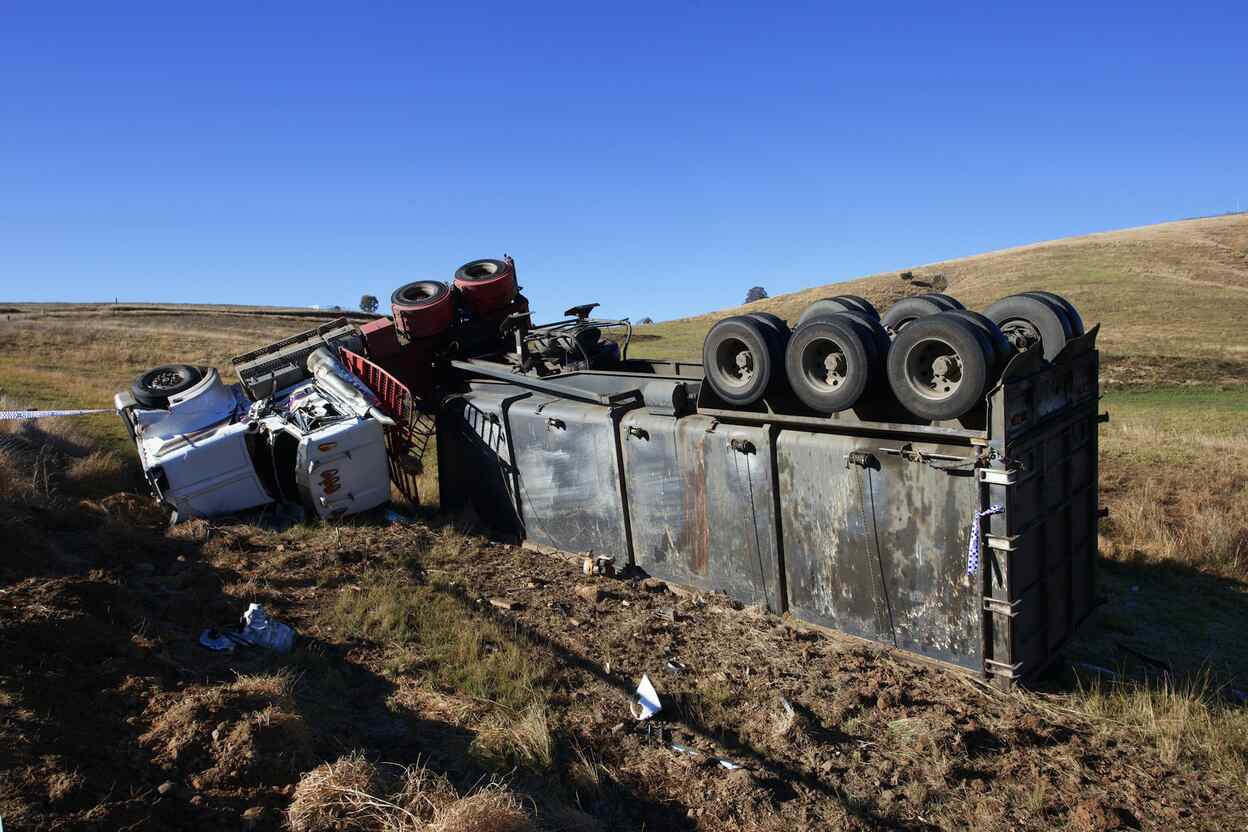
A truck accident in Niagara Falls can leave you facing serious injuries, lost income, and uncertainty about your future. Determining responsibility may also be complicated. Depending on the circumstances, the truck driver, trucking company, vehicle owner, maintenance provider, or cargo loader may be liable. These claims often require specialized evidence, including electronic driving logs, vehicle data, maintenance records, and carrier safety information. Derek Wilson represents people injured in commercial truck collisions throughout Niagara Falls and the Golden Horseshoe.
Table of Contents
ToggleCommercial truck accidents often involve more complicated investigations than ordinary passenger vehicle collisions. Large trucking companies may have their own insurers, investigators, and legal representatives involved shortly after a crash.
A Niagara Falls truck accident lawyer can investigate the collision, identify potentially responsible parties, preserve evidence, and determine which insurance policies may apply.
Legal representation may also involve coordinating accident benefits, documenting financial and medical losses, negotiating with insurers, and pursuing litigation when necessary.
Commercial trucks operate under safety requirements that generally do not apply to ordinary passenger vehicles. Their drivers and operators may be subject to regulations governing driving hours, inspections, maintenance, and cargo securement.
A collision may involve several companies, each with different responsibilities and insurance arrangements.
The size and weight of transport trucks can also contribute to severe injuries requiring extensive rehabilitation and long-term care.
These factors make it important to investigate both the immediate cause of the collision and the commercial operations behind the vehicle.
Consider contacting a lawyer as soon as possible after receiving necessary medical attention, particularly if your injuries are serious.
Commercial vehicle evidence may be difficult to obtain later. Electronic data can be overwritten, vehicles repaired, and relevant documents dispersed among several companies.
Early legal advice can help identify records that should be preserved and clarify the deadlines affecting your claim.
I’ve practised law since 1993, spending much of my career handling personal injury and insurance litigation. Earlier in my career, I represented insurance companies, giving me direct experience with how insurers assess and defend injury claims.
Today, I represent injured people and disability claimants throughout Niagara Falls and the Golden Horseshoe.
I deliberately limit my caseload so I can remain personally involved in the cases I accept. When you’re recovering from a serious truck accident, I believe you should have direct access to the lawyer responsible for your claim.
Having worked for insurance companies, I understand how insurers investigate collisions, evaluate injuries, and challenge compensation claims.
Disputes may concern who caused the accident, whether particular injuries resulted from the collision, how much income you’ve lost, or what treatment you’ll need in the future.
My background helps me anticipate these arguments and focus on the evidence needed to address them.
Yes. I personally handle the files I accept rather than operating a high-volume practice where clients rarely speak with their lawyer.
I take the time to understand how your injuries have affected your health, employment, and family life. That involvement also helps me assess the long-term consequences of your accident.
I offer free consultations to people considering a truck accident claim.
Personal injury cases are handled on a contingency-fee basis, meaning legal fees depend on obtaining compensation rather than being charged hourly as the case progresses.
I’ll explain the fee agreement, applicable expenses, and payment arrangements before you decide whether to proceed.
Responsibility for a commercial truck accident may extend beyond the driver. The circumstances could support claims against a trucking company, vehicle owner, maintenance contractor, or another party whose negligence contributed to the collision.
Party | Potential Liability Issue | Key Evidence |
Truck driver | Speeding, fatigue, distraction, unsafe driving | Driving logs, witness accounts, vehicle data |
Trucking company | Unsafe scheduling, inadequate training or supervision | Dispatch records, safety policies, CVOR records |
Truck owner or leasing company | Negligent maintenance or other legally attributable failures | Ownership documents, inspection and repair records |
Maintenance provider | Defective repairs or overlooked mechanical problems | Service records, repair invoices |
Cargo loader or shipper | Improper loading, overloading, unsecured cargo | Loading records, bills of lading, weight information |
Manufacturer or parts supplier | Defective vehicle components | Engineering assessments, product records |
Another road user | Negligent driving contributing to the crash | Police reports, video, witness statements |
A truck driver may be liable when negligent driving contributes to a collision.
Examples include speeding, distracted driving, following too closely, unsafe lane changes, improper turns, impairment, and driving while fatigued.
Violations of applicable hours-of-service requirements may also provide relevant evidence.
Liability depends on whether the driver’s conduct breached the applicable standard of care and contributed to the accident.
A trucking company may bear responsibility for its driver’s negligence or its own failures in managing commercial operations.
Potential issues include inadequate driver training, negligent hiring, unsafe scheduling, poor supervision, and failure to address known vehicle defects.
Ontario’s Commercial Vehicle Operator’s Registration (CVOR) program records information about commercial operators, including collisions, convictions, inspections, and safety ratings.
These records can help identify relevant safety concerns, although a poor safety history does not independently establish liability for a particular crash.
Yes. Maintenance contractors and cargo-loading companies may be responsible when their negligence contributes to a collision.
For example, improperly repaired brakes or neglected tire defects may cause a driver to lose control.
An overloaded trailer or unsecured shipment can also affect stability, braking, and handling.
Inspection reports, repair invoices, cargo documents, and load-securement records can help establish what went wrong.
Yes. Ontario law allows responsibility for an accident to be divided among multiple negligent parties.
A driver, trucking company, maintenance contractor, and another road user may each have contributed to the collision.
Under Ontario’s Negligence Act, fault can be apportioned according to each party’s responsibility.
Identifying all potentially liable parties is important when determining available compensation and insurance coverage.
Truck accident investigations often depend on records that are unavailable in ordinary car accident cases.
Commercial vehicles may generate electronic information about driving activity, vehicle operation, and fleet management. Combined with physical evidence and witness accounts, these records can help reconstruct a collision.
Evidence | What It May Establish |
Electronic logging device (ELD) records | Driving time, duty status, potential fatigue |
Event data recorder or vehicle data | Available information about vehicle operation around the collision |
GPS and telematics | Vehicle location, routes, operating patterns |
Dashcam footage | Events before or during the collision |
CVOR records | Carrier safety history and regulatory information |
Driver qualification and training files | Driver credentials, training, employer oversight |
Dispatch communications | Scheduling instructions, delivery pressures |
Maintenance and repair records | Vehicle condition, known defects, repairs |
Daily inspection reports | Defects identified before or after operation |
Cargo and loading documents | Shipment details, loading arrangements, weight |
Police reports and witness statements | Collision circumstances and observations |
Scene photographs and surveillance | Vehicle positions, damage, road conditions |
Collision reconstruction evidence | Potential causes and sequence of events |
Not every truck contains the same electronic systems or retains identical records. The available evidence depends on the vehicle, operator, and circumstances.
Electronic logging devices record information used to establish a commercial driver’s duty status and compliance with hours-of-service requirements.
Ontario requires certified ELDs for many commercial drivers who must maintain daily logs, subject to exemptions.
These records may help determine whether a driver exceeded permitted driving hours or had insufficient rest.
ELDs are different from event data recorders, which may capture vehicle-operation information around a collision.
CVOR records provide information about a commercial operator’s safety performance.Depending on the records available, they may identify previous collisions, convictions, inspections, safety ratings, and regulatory interventions.
This information can be relevant when investigating whether a trucking company adequately managed known safety risks.
A carrier’s history must still be connected to the issues involved in the particular accident.
Important records may include:
Ontario regulates commercial vehicle inspections under O. Reg. 199/07 and load security under O. Reg. 363/04.
These requirements can help establish whether unsafe maintenance or loading practices contributed to a crash.
Niagara Falls is part of a major commercial transportation network connecting Ontario with the United States.
The QEW, Highway 420, and nearby international crossings carry substantial commercial traffic. According to Niagara Economic Development, approximately one million transport trucks use Niagara’s international border crossings annually.
Common contributing factors in commercial truck collisions include:
The cause must be established through evidence rather than assumptions about the truck’s size or the circumstances of the collision.
Fatigue can impair attention, reaction time, and decision-making.
Ontario’s hours-of-service regulations generally limit applicable commercial drivers to 13 hours of driving in a day, alongside other driving, on-duty, and rest requirements. Exceptions may apply.
Electronic logs, dispatch instructions, and trip records may reveal whether a driver was operating beyond permitted limits.
Defective brakes, worn tires, steering problems, and other mechanical failures can make a heavy truck difficult to control.
Commercial operators must comply with applicable inspection and maintenance requirements.
When a collision involves mechanical failure, maintenance records can help determine whether the defect was identified, whether repairs were completed, and who was responsible.
Commercial truck collisions can take several forms:
The collision mechanism can help investigators determine whether driver conduct, vehicle condition, cargo movement, or another factor contributed to the crash.
The force involved in a commercial truck collision can cause injuries requiring extensive treatment or permanent changes to daily life.
Potential injuries include:
A Niagara Falls brain injury lawyer or Niagara Falls spinal cord injury lawyer can help assess the long-term consequences of these particularly serious injuries.
A serious injury may require treatment long after the initial hospitalization.
Future needs can include physiotherapy, occupational therapy, mobility equipment, home modifications, attendant care, and ongoing medical support.
Some people cannot return to their previous employment or may experience permanently reduced earning capacity.
Assessing these losses requires medical evidence, rehabilitation recommendations, and realistic projections of future needs.
People injured in Ontario truck accidents may have access to two distinct sources of compensation: automobile accident benefits and a personal injury lawsuit.
Accident benefits are provided through applicable automobile insurance coverage, generally regardless of fault.
A tort claim seeks damages from parties legally responsible for the collision.
Depending on the circumstances, compensation may address:
Ontario law imposes specific rules, thresholds, deductibles, and restrictions on certain motor vehicle accident claims.
There is no reliable average settlement amount for a Niagara Falls truck accident.
Claim value depends on the injuries, prognosis, financial losses, and available evidence.
Important considerations include the severity and permanence of the injuries, ability to work, future treatment requirements, pre-accident health, and applicable insurance coverage.
Liability and shared fault may also affect recovery. A fair assessment considers both existing losses and reasonably supported future consequences.
Yes. Being partly responsible for a collision does not necessarily prevent you from recovering damages.
Under Ontario’s contributory-negligence framework, compensation may be reduced according to your percentage of fault.
For example, if an injured person is found 20% responsible, recoverable damages may generally be reduced by that proportion.
The allocation of fault depends on the evidence and applicable law.
Ontario changed its automobile accident benefits framework effective July 1, 2026.
Medical, rehabilitation, and attendant-care benefits remain mandatory components of applicable coverage.
Other benefits, including income replacement, non-earner, death, funeral, and certain additional supports, may depend on the optional coverage purchased and the policy’s applicable terms.
Existing policies and renewal arrangements may also affect which coverage applies.
The Financial Services Regulatory Authority of Ontario provides information about Ontario’s automobile insurance framework.
Because coverage can vary, it is important to review the policy applicable to your accident rather than assume every benefit is automatically included.
For more information, see Ontario accident benefits.
The steps you take after a collision can affect both your recovery and your ability to establish what happened.
Do not put yourself at risk to gather evidence. Your immediate safety and medical needs come first.
The Niagara Regional Police Service operates a Collision Reporting Centre at 5700 Valley Way in Niagara Falls.
Not every collision should be reported through a reporting centre. Serious injuries, suspected criminal offences, and other circumstances may require police attendance at the scene.
Follow the Niagara Regional Police Service reporting instructions or contact police if you’re unsure how to proceed.
Niagara Health operates a 24-hour Emergency Department at Niagara Falls Hospital, located at 5546 Portage Road.
Serious truck accident injuries may not be immediately apparent. Symptoms involving the head, neck, spine, or internal organs can require urgent assessment.
If you need emergency assistance, call 911 rather than travelling to the hospital yourself.
Ontario’s Limitations Act, 2002 generally establishes a two-year basic limitation period beginning when a claim is discovered.
However, exceptions and other statutory deadlines may apply. The relevant date is not necessarily identical in every case.
Automobile accident benefits also involve separate notice and application requirements.
Seeking legal advice promptly can help protect your rights while evidence remains available.
A serious truck accident can change your life without warning. Alongside medical treatment, you may be dealing with missed work, financial pressure, and uncertainty about your recovery.
Commercial trucking claims can add another layer of difficulty. Determining responsibility may require electronic driving logs, CVOR records, maintenance files, cargo documents, and information from several insurers or companies.
I’ve spent more than 30 years practising law, including representing insurance companies before shifting my focus to injured people and disability claimants. That experience helps me understand how insurers approach serious injury claims and what evidence may be needed to challenge their positions.
I intentionally maintain a limited caseload so I can personally handle the cases I accept.
My Hamilton practice represents injured people in Niagara Falls and throughout the Golden Horseshoe.
If you’ve suffered serious injuries, lost income, or lost a family member in a commercial truck collision, I can review the circumstances and explain your legal options. I offer free consultations and contingency-fee representation.
If available, bring the following:
However, don’t delay contacting me because you haven’t gathered every document. I’ll review what you have and help determine whether you have grounds to pursue compensation under Ontario law.
Get a Free Consultation to find out if you have a claim for your critical injury.
If you’ve been hurt in accident, call now for a free consultation.
"*" indicates required fields


After sustaining a personal injury, it can be confusing and overwhelming to understand which benefits you may be entitled to. Whether you have suffered from a wrongful death in the family, been in a car accident, suffered a spinal cord injury or been injured from someone else’s negligence, our hamilton personal injury law firm is here for you.
It is important to speak with a personal injury lawyer as quickly as possible to help you understand your rights. We are here to help. Plus, we like what we do and we make our process as simple as possible. I will help you understand your rights and get you the compensation you deserve to help you on the road to recovery.
Give us a call or complete the consultation form so that we can better understand your injuries and assess how we can help.
We can arrange a free consultation to review the details of your accident. We will give you an honest assessment of your case and how we can help.
If you decide to work with us, we will fight for you to get fair compensation.
"*" indicates required fields
"*" indicates required fields
"*" indicates required fields